7 days free · no card · then $19 a month
Know what you actually made.
Reseller inventory and profit tracking — what you bought, what it cost, and what it sold for across Poshmark, eBay, Mercari, Depop and Vinted. Profit worked out for you, ready for taxes, on your phone — and it still works when there's no signal.
No card needed · Cancel from inside the app · Your records stay yours even if you stop paying
- Say it or scan it. Describe an item out loud, or scan a barcode
- Know what it's worth. What your own similar items sold for, before you buy
- Find it when it sells. Box labels you can print and scan
- Hand it to your accountant. Costs, mileage and sales tax, sorted
Built around how a reseller's day actually goes
Add it while you're standing in the booth
Snap a photo, put in what you paid, keep moving. Fill in the rest at home. No more guessing what a box cost three weeks later.
It tells you what needs doing
Sold on eBay but still live on Poshmark. Bought a month ago, never listed. Sitting sixty days with no sale. It finds all of it so you don't have to.
Two people, one inventory
Source with a partner? You both see the same items, live, and either of you can update anything. Every item says who added it and whose profit it counts toward.
Where the money actually comes from
Profit by month, by category, and by where you bought it — so you know which flea market is worth the drive.
Tax time isn't a weekend
Cost of goods, fees, shipping, mileage and expenses all in one place. Download a spreadsheet and hand it over.
Bought a box or a pallet? This is the part nobody else gets right.
Say you paid $100 for a box at an estate sale and three things in it were worth listing. Split that evenly and each one cost $33 — so two of the three look like losses, when in fact you made money on all of them. Neither number is true, and your tax return is built on both.
| Wool coatsold $200 | cost $33.33 | +$166.67 |
| Ceramic vasesold $12 | cost $33.33 | −$21.33 |
| Enamel pinsold $5 | cost $33.33 | −$28.33 |
Two of the three look like losses. You made money on all of them.
| Wool coatsold $200 | cost $92.17 | +$107.83 |
| Ceramic vasesold $12 | cost $5.53 | +$6.47 |
| Enamel pinsold $5 | cost $2.30 | +$2.70 |
Cost follows value, and the three still add to exactly $100.
It works itself out as things sell — a sale price replaces a listing price, a listing price replaces a guess, and every item's share sharpens. Nothing to recalculate, and the totals always come back to what you actually paid.
Most resellers keep this in a spreadsheet. It isn't on their phone, it can't be shared, and it starts over every January.
If that's you, bring it with you. The app imports your existing sheet so nothing gets retyped.
What it actually looks like
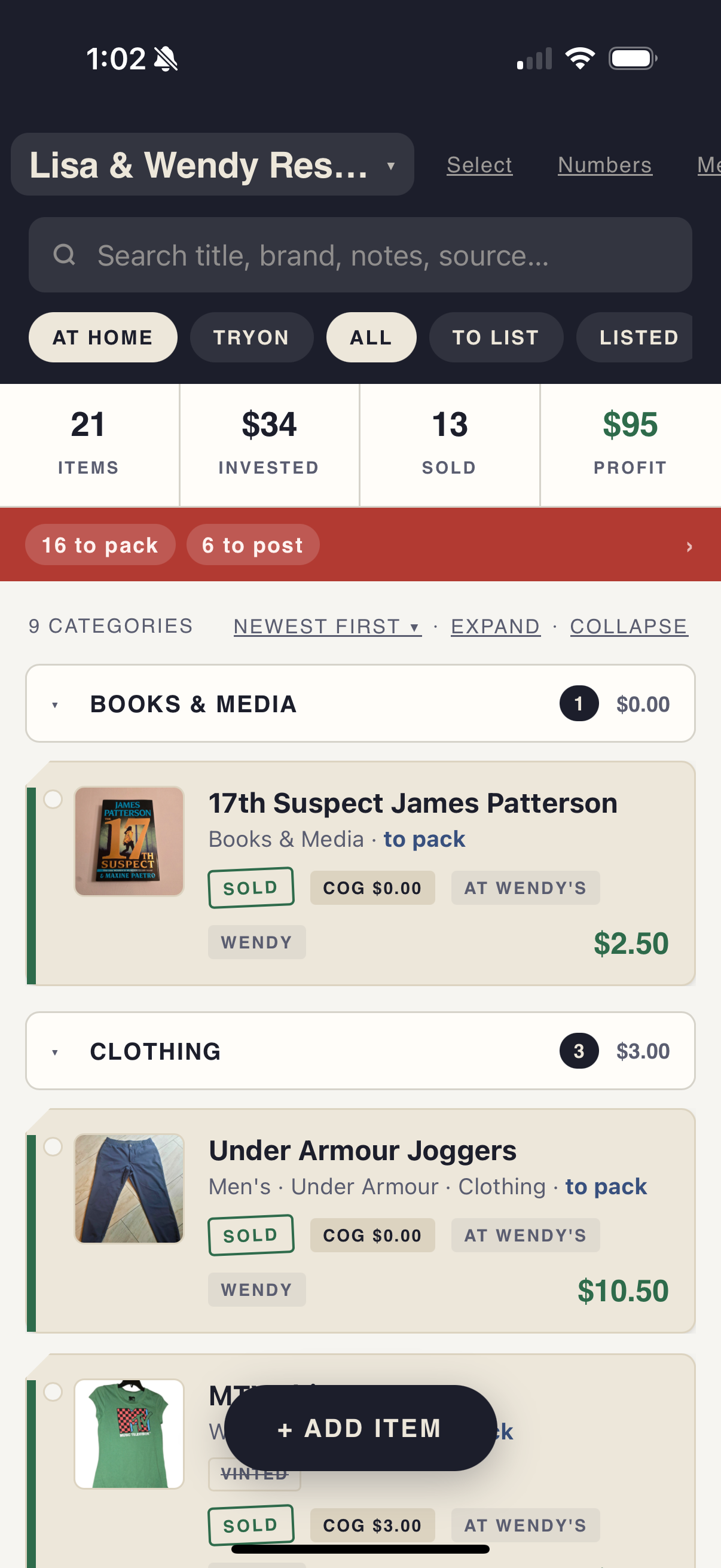
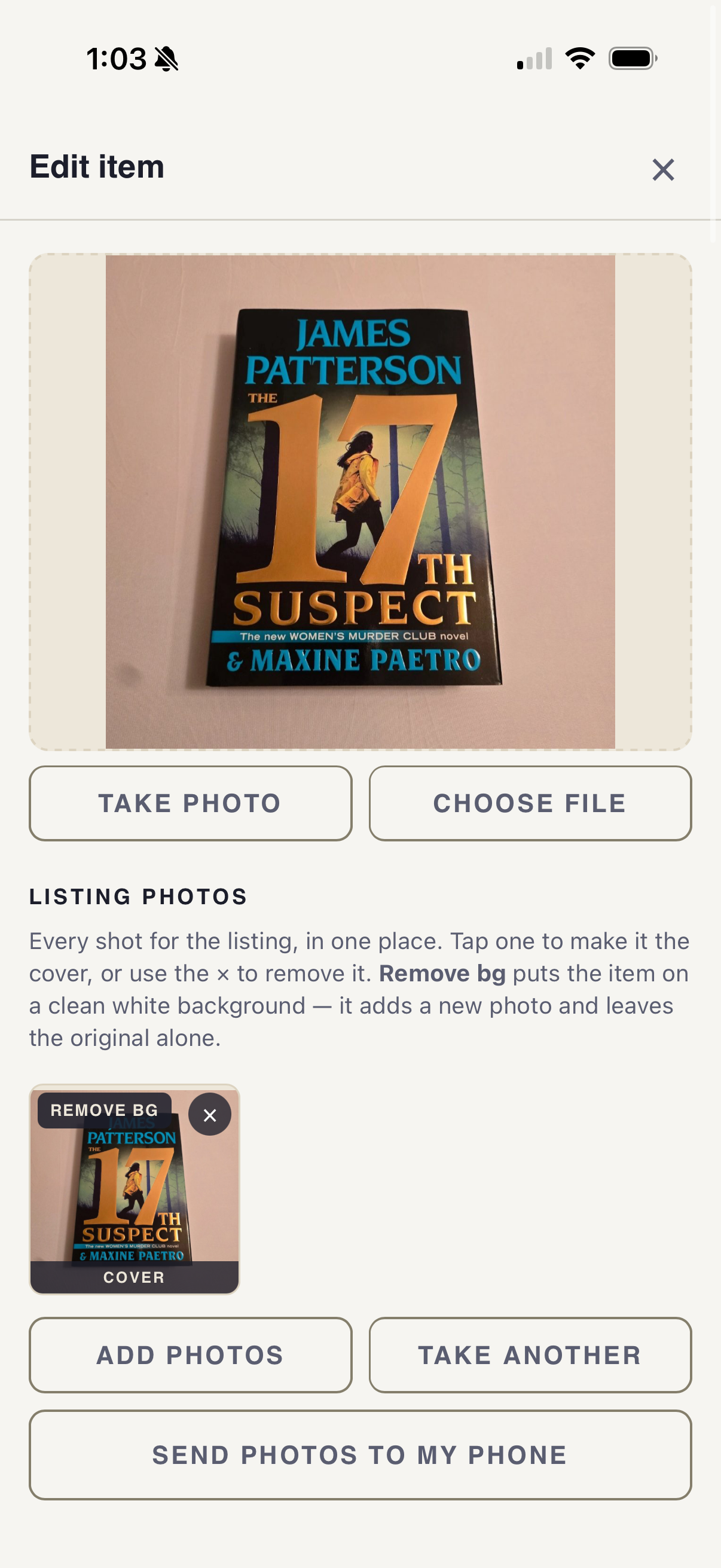
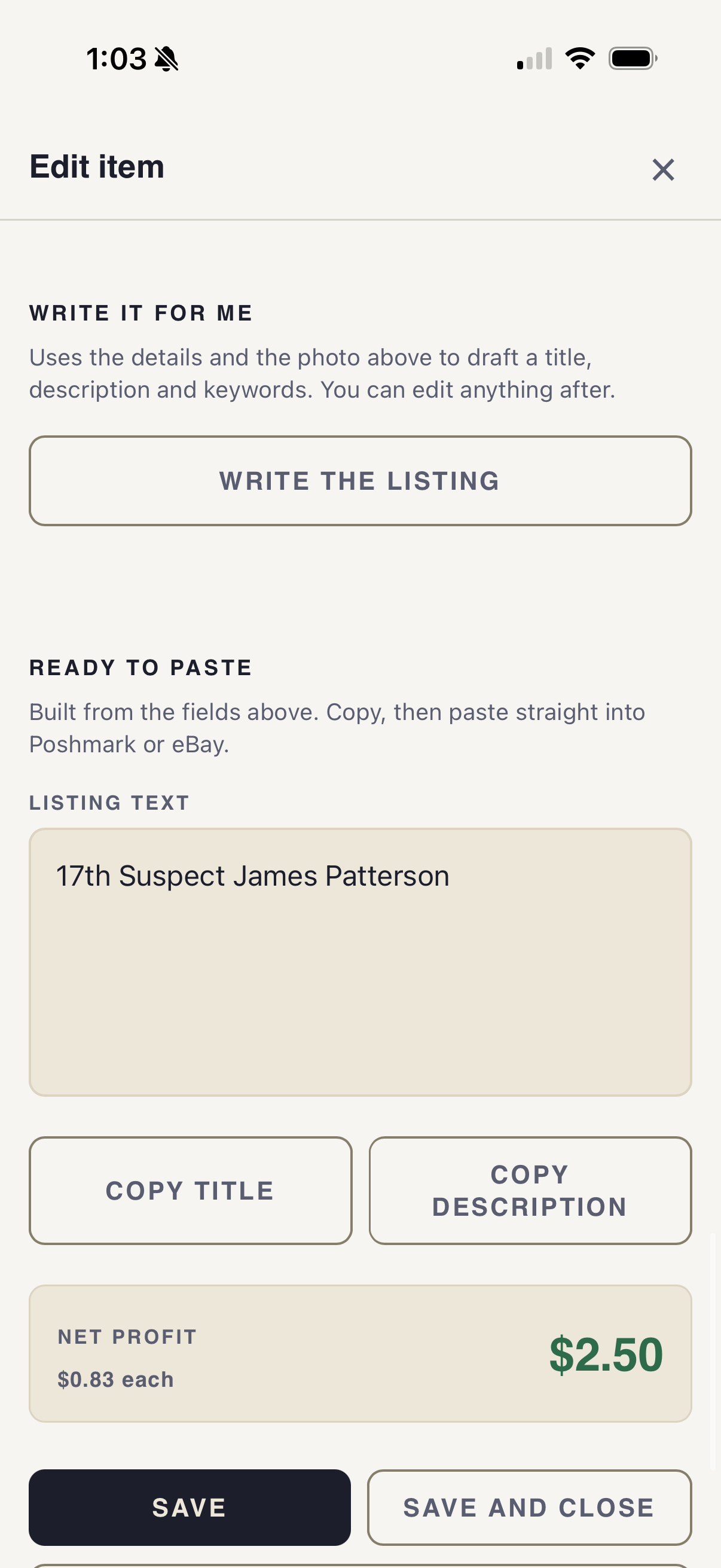
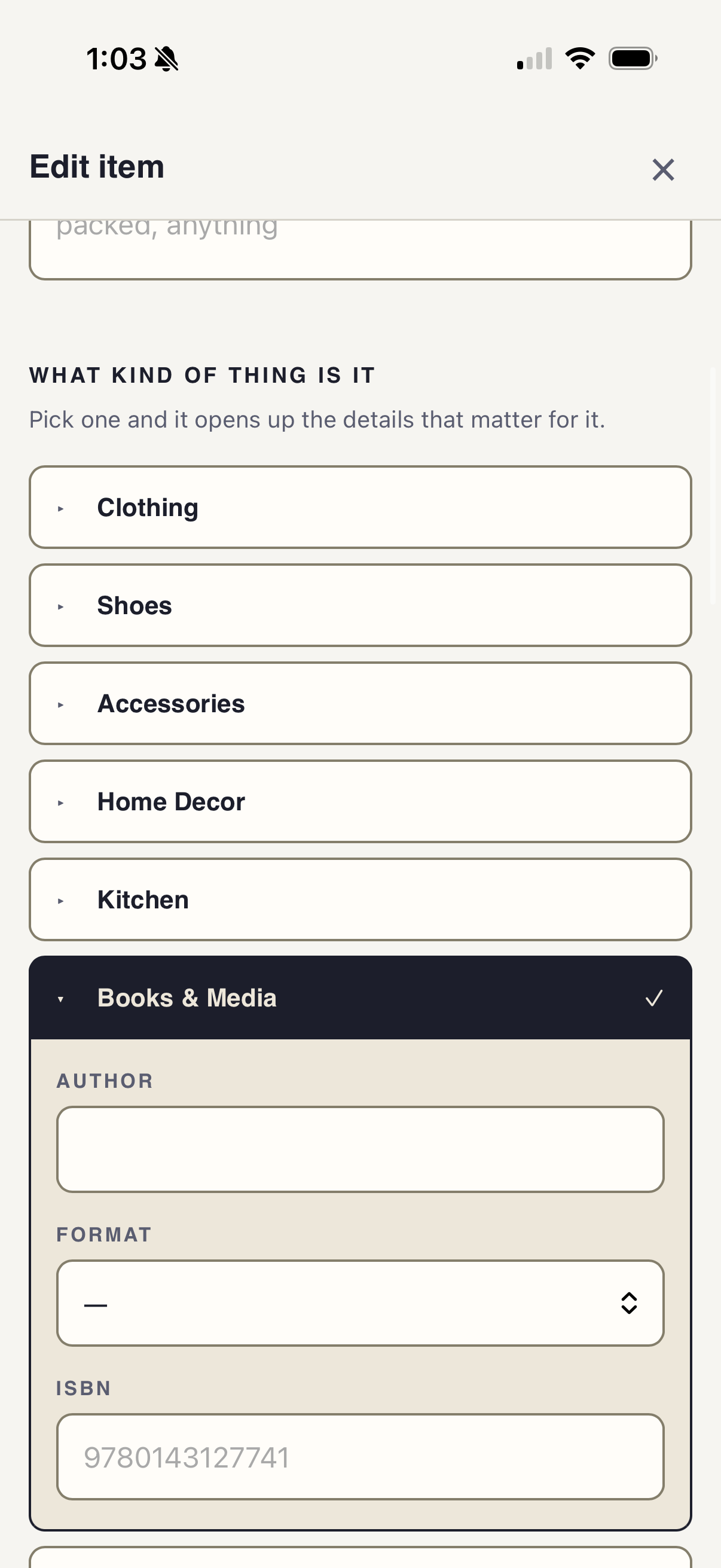
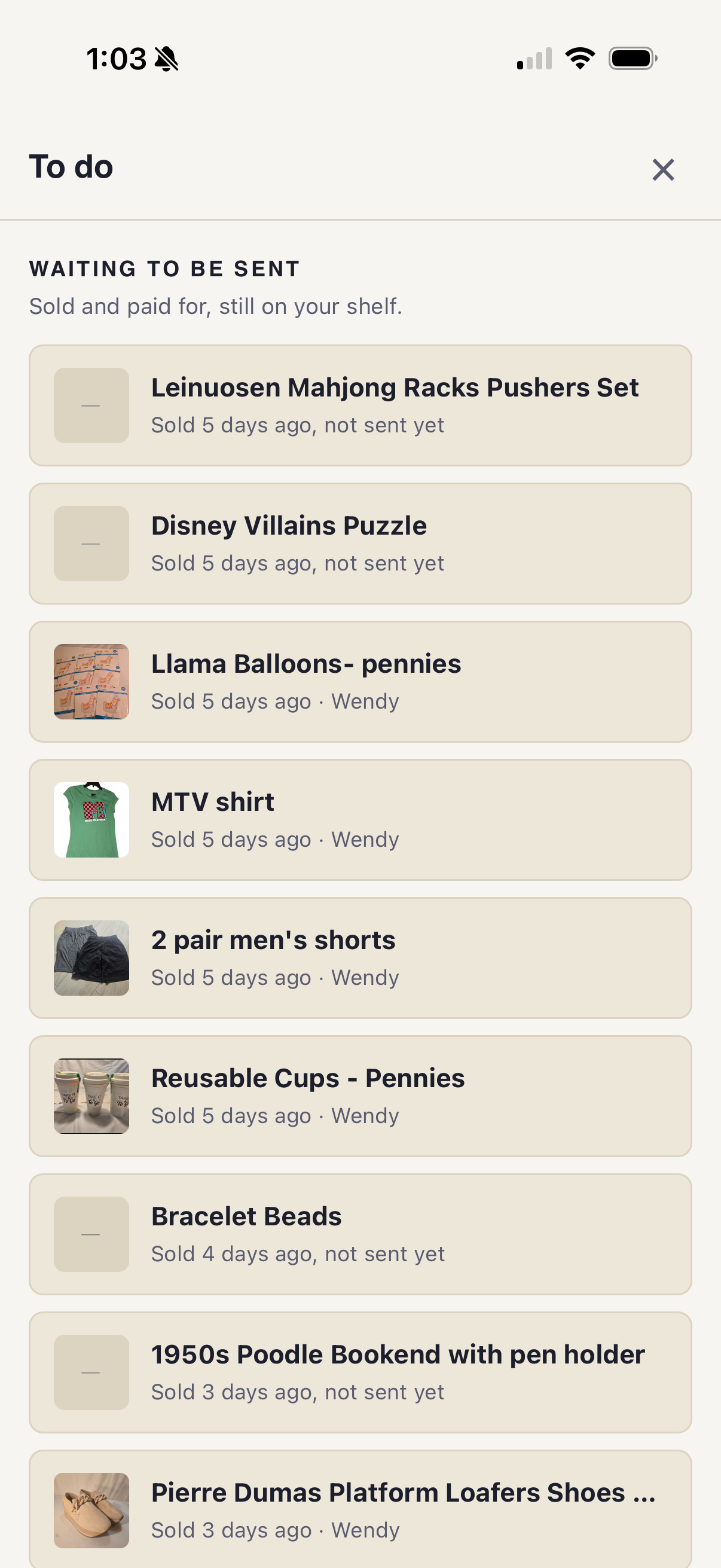
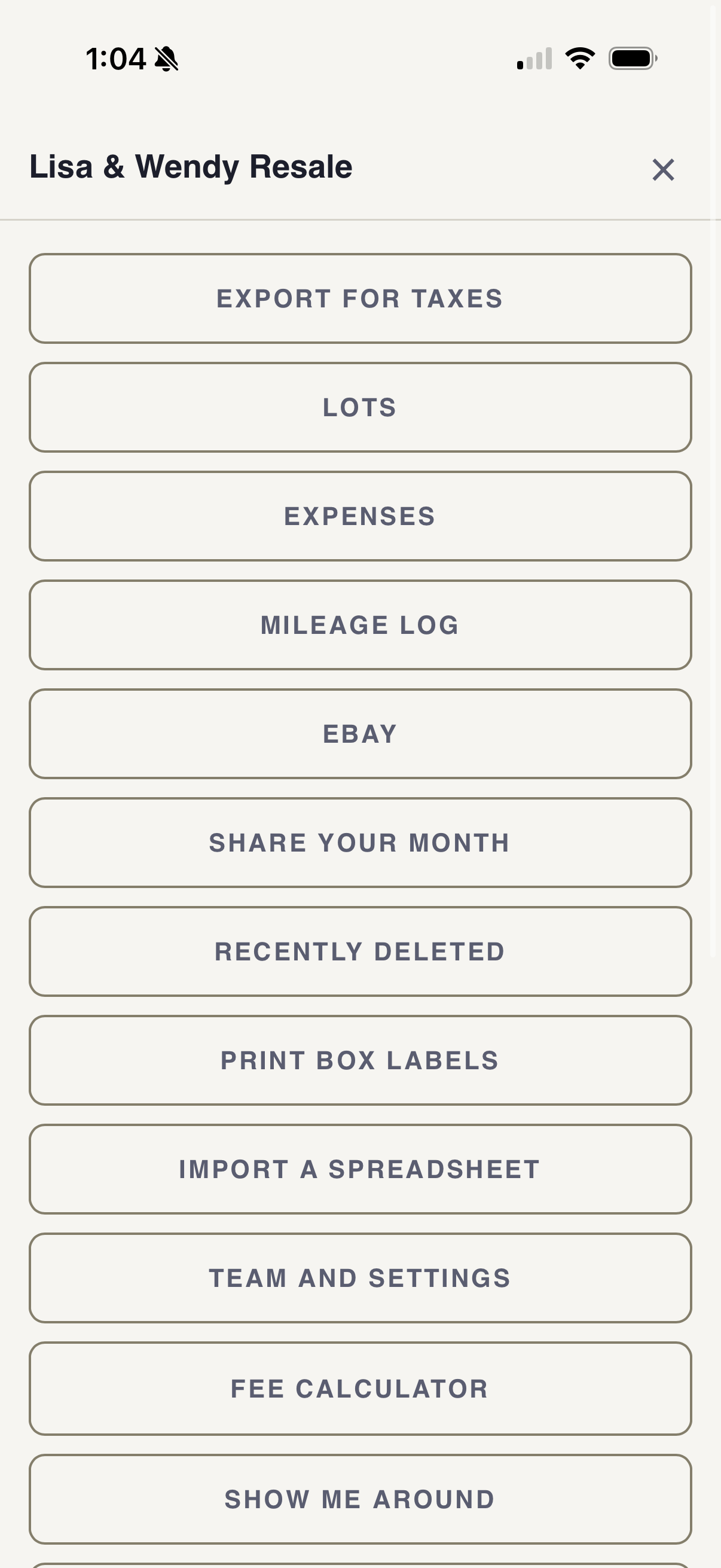
Real screens from a real inventory — my mother's, with her permission. Straight off her phone, not mock-ups.
Everything it does
Seven days isn't long enough to find all of this on your own, so here it is in one place.
- Photograph an item and log what you paid, from your phone, in the booth
- Say it instead of typing it — “blue Nike hoodie, gave seven bucks at Goodwill” fills in the title, the price and the shop
- Scan a barcode. Books fill in their own title, author, publisher and cover
- As many photos per item as you like, reorder them, pick the cover
- Cut the background out of a photo — white background, ready to list
- Import your existing spreadsheet — it works out the columns itself
- Already selling on eBay? Bring those listings across with their photos and prices
- Brand, size, color, material, condition, measurements, weight and box size
- Books get author, format and ISBN
- Turn off the fields you never use, so there's less to scroll past
- Search everything — titles, brands, notes, sources
- Duplicate an item when you've got five of the same thing
- It writes the title, description and keywords for you from the details and the photo
- Everything formatted ready to paste into any marketplace
- Post to eBay directly, with the category and item specifics handled — after a one-time setup on eBay's side
- A browser panel that sits beside Poshmark or Mercari with your details one tap from the clipboard
- Tick off which marketplaces you've posted to
- “You've sold one of these before” — what similar things of yours went for, and how long they took, while you're still deciding whether to buy it
- It tells you when something's priced too high, using your own sales rather than a guess
- Profit per item after fees and shipping, worked out for you
- Profit by month, by category, and by where you bought it
- Which marketplace actually pays — profit by where each thing sold
- Return as a multiple and margin as a percentage — 2.4× and 61%, not just a dollar figure
- Which boxes were worth buying, ranked best to worst
- Average time to sell, and how much cash is sitting in unsold stock
- Lots and pallets costed by value, not split evenly
- Put a box name on an item — A1, blue tub, under the stairs, whatever's on your label
- Print labels with a code — scan one and see what's in that box right now
- Something sells and the app tells you which box to open
- Mark it shipped, with a tracking number, so “where's my parcel” doesn't mean searching email
- A packing queue: sold, paid for, still on your shelf
- A buyer sent it back? Put it back in stock and take the sale out of your profit properly
- The fee the marketplace kept is recorded as an expense, because that money really has gone
- Deleted something by mistake? Thirty days to put it back, and it says who removed it
- Two people in the same inventory, live, on their own phones
- Every item records who found it
- Even split, or completely separate books in one account
- Filter the whole app to one person — items, mileage, expenses, the numbers
- Remove someone, or leave yourself. Whoever leaves is emailed their records for their own taxes
- Up to three people on the basic plan, more on the bigger ones
- One spreadsheet with cost of goods, fees, shipping, mileage and expenses
- Sales the marketplace collected tax on, kept apart from the ones you owe it on
- Business expenses, with a photo of the receipt
- It reads receipts for you so you're not typing them in
- Mileage log for sourcing trips
- Each person totaled separately if you keep separate books
- Year by year, so last January is still there
- It opens and works with no reception — flea markets, church halls, basements
- Log what you just bought and it saves to your phone, then uploads when you're back
- Your inventory and its photos are there to look at either way
- Add it to your home screen and it opens like an app
- A to-do list: what's not listed, what's still up after it sold, what's been sitting too long
- It also catches the things that make your numbers wrong — sold with no price, no cost of goods
- Sort by newest, worth most, or longest sitting
- Save a view you keep coming back to and get it back with one tap
- A picture of your month to post, if you want to — profit, best find, best place to source
- Export whenever you like — not only if you leave
- Stop paying and nothing is deleted — it goes read-only and you can still export everything
- Delete everything yourself, whenever you want
- No adverts, and nothing sold to anybody
The questions everyone asks first
Does it crosspost for me?
No, and that's a decision rather than a gap. Tools that post for you work by driving a hidden browser session on your account, which is against most marketplaces' rules and can get a seller suspended. Your listings are your livelihood and I'm not risking them.
What it does instead: writes the title, description and keywords, keeps them one tap from your clipboard, and posts to eBay properly through eBay's own system. The rest is paste and go.
What happens to my records?
Backed up every night, kept separately from the live database, so a mistake at either end doesn't take both. Hosted on Supabase and Cloudflare rather than a computer under my desk.
And the part that matters more: you can export everything, at any time, in one tap. Not only if you cancel — whenever you like. If this app disappeared tomorrow you would still have your figures in a spreadsheet. That's deliberate; you shouldn't have to trust me for your records to be safe.
Do I need to download anything?
No. It opens in the browser on any phone, tablet or laptop, and you can add it to your home screen so it behaves like an app. No app store, no updates to install, and it keeps working when there's no signal.
What it costs
$19a month
- Everything above, with no limit on how many items you track
- Three people on one inventory
- Cancel any time, from inside the app
- If you stop paying, your records stay. You can still read and export them
Changed your mind in the first month? All of it back, no reason needed. Cancel later and you're not charged again — and your records stay either way, read-only, to export whenever you like.
Write about reselling, or make videos? If people sign up because of you, you get 30% of what each of them pays for their first year. It's in the app under Menu → If you talk about this.
If you need more seats
Change plan any time from inside the app. Nobody has to start on the big one to try it.
7 days free, no card.